Tips
Best Time to See Northern Lights in Finnish Lapland
The first time you see the northern lights, you usually hear yourself...
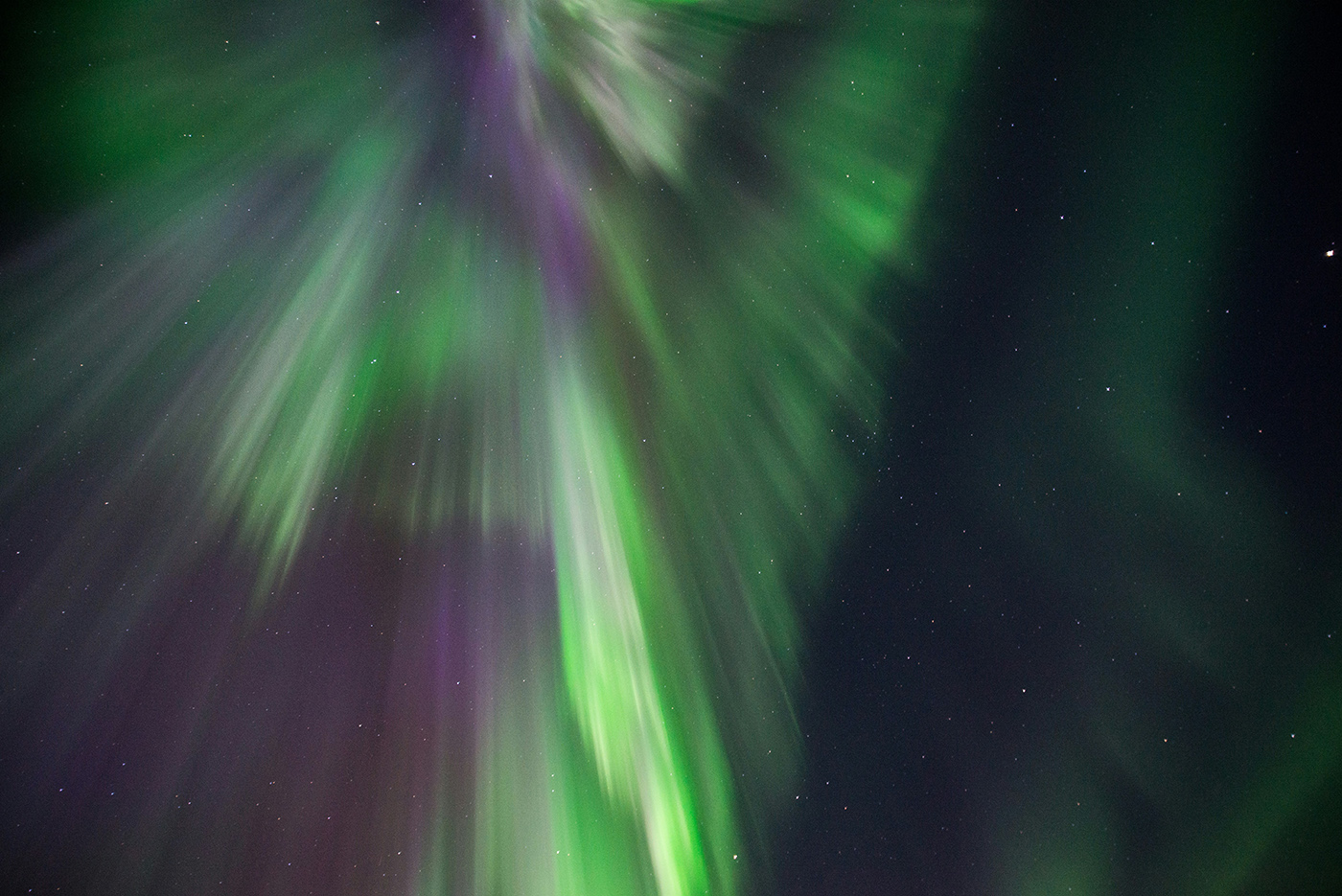
The first time you see the northern lights, you usually hear yourself before you see anything clearly: a quiet swearword, a laugh, then silence. A pale green band low over the trees brightens, splits, and starts to pulse. In Finnish Lapland, this happens on roughly half of all clear, dark nights between late August and early April — but only if you’re in the right place, looking up at the right hour, on a night the sky and the sun are both cooperating.
This guide breaks down the best time to see northern lights in Lapland month by month, the dark-hour window that actually matters, the role of solar activity right now, and the small mistakes that ruin perfectly viable aurora nights. It’s written for travellers planning a stay in Levi or anywhere else in the Finnish Arctic.
Aurora borealis is a geomagnetic phenomenon, not a calendar one — the sun fires charged particles at Earth all year round. What changes by month is darkness and weather, the two things that decide whether you see anything from the ground.
Levi sits at roughly 67.8°N latitude, well inside the auroral oval — the ring around the magnetic pole where aurora is statistically present every clear night. Geomagnetic activity is measured on the planetary K-index (KP), a 0–9 scale where higher values mean a stronger solar storm and aurora pushed further south. Because of Levi’s high latitude, you don’t need a strong storm to see something: aurora becomes visible in Levi from around KP 2–3 — a routine, near-nightly level of activity — while travellers in southern Finland or central Europe usually need a much stronger KP 5–7 display for the same view.
The northern lights season in Finnish Lapland runs from late August to early April. Outside that window, the midnight sun keeps the sky too bright. Inside it, your odds depend less on the calendar and more on cloud cover, moon phase, and where you choose to stand.
Below is what to actually expect each month if you’re planning around the aurora borealis Lapland season. The short version: September and March deliver the strongest statistical odds; December and January deliver the longest dark hours.
By the last week of August the nights are dark enough — astronomical twilight ends around 11 pm — and equinox geomagnetic activity tends to peak. September is statistically one of the better months for aurora nights, partly because clouds clear more often than in mid-winter and partly due to the equinox effect on the solar wind.
There’s no snow yet, so contrast comes from the dark forest floor and reflective lakes. Air temperatures hover between 0 and +10 °C, which means standing outside for two hours is comfortable in normal autumn clothing. Crowds are thin and accommodation costs less than in December.
Early October still feels like autumn; by the last week, the first snow usually falls and night-time temperatures drop below freezing. Nights are now 12+ hours long. October often has a clearer-sky pattern than November — useful, because cloud cover is the single biggest factor that wrecks aurora nights.
By mid-November, snow has settled and twilight stretches into a 16-hour darkness window. Cloud cover is heavier than September or March, so November is hit-or-miss — but when it hits, fresh snow reflects the green, and the contrast is striking. If this month interests you, see our November holidays in Lapland guide for what else to plan around the aurora chase.
This is the headline month for visitors, partly because of Christmas and partly because around December 12 to January 2 Levi enters kaamos — polar night — and the sun never crosses the horizon. You don’t need to wait for “night” because the sky is dark or twilight-blue almost continuously.
The trade-off: cloud cover is heaviest in December and early January, and the moisture that brings snow also blocks the sky. Plan a longer stay (4+ nights) and accept that some evenings will be solid grey. For broader planning around the festive season, see our notes on Christmas holidays in Finnish Lapland.
January is the coldest month in Lapland — temperatures of −20 to −30 °C are normal — and also one of the longest in terms of usable darkness. Skies clear noticeably more often than December as the polar high settles in. If you can handle the cold, January is a strong bet. Read our January holidays in Lapland guide for what to wear and book.
Daylight returns (about 7–9 hours by month’s end), but you still get 14+ hours of dark, and the cloud pattern improves week by week. Temperatures are still firmly winter, snow is at its deepest, and aurora chases are easier because tour operators have a wider weather window. See our February holidays in Lapland breakdown for activity ideas.
March is the month a lot of seasoned aurora photographers pick. You get the equinox boost in geomagnetic activity, the cleanest skies of the season, milder temperatures (often −5 to −15 °C at night), and dark hours that still stretch from roughly 7 pm to 6 am at the start of the month. If you only have one week, late February through mid-March is hard to beat.
By early April, sunset slides past 8 pm and the dark window narrows fast. Until about April 10, you can still see aurora on dark, clear nights — after that, lingering twilight makes it unreliable. After mid-April, the season is effectively over until late August.
Aurora doesn’t care about your bedtime, but the geomagnetic peak per night usually falls between 9 pm and 1 am local time, with a sharper peak around 10 pm to midnight. That’s when the magnetic field on the night side of Earth is most stretched and most likely to release energy as visible aurora.
Practical rule: don’t give up at 11 pm. Many aurora trips end early because guests get cold, go inside, and miss the strongest substorm of the night thirty minutes later. A cabin with a glass roof, panoramic window, or outdoor hot tub solves this — you can stay warm and still see the sky. Several of our Lapland cabins are chosen specifically for that.
The sun runs on an 11-year cycle. Solar Cycle 25 reached its maximum in October 2024, and elevated activity is forecast to continue through 2025 and into 2026. Practically, this means more frequent strong substorms, more red-and-purple aurora (not just green), and occasionally aurora visible far further south than usual.
For real-time conditions, the NOAA Space Weather Prediction Center publishes the 30-minute aurora forecast and the planetary KP index, and the Finnish Meteorological Institute runs a Finland-specific aurora alert service. Bookmark both before you fly.
Most “we didn’t see anything” stories come down to four fixable mistakes.
Cloud cover. Even a thin overcast hides moderate aurora completely. Check a satellite cloud map (FMI’s is good) before you commit to a viewing spot — sometimes driving 20 km north or south puts you under clear sky.
Light pollution. Levi village has streetlights, hotels and ski-lift floodlights that drown out a KP-2 aurora. Walk or drive 10 minutes out, or stay somewhere already on the dark side of a hill.
The full moon. A full moon won’t kill aurora, but it dims the fainter displays and burns out long-exposure photos. If photography matters to you, plan around the new moon.
Looking the wrong way. Aurora appears in the north in Lapland, but during strong storms it crosses straight overhead and sometimes shows in the south. People who only look north miss the overhead arcs. Scan the whole sky every few minutes.
Quitting early. Substorms come in waves about 90 minutes apart. If you’ve been outside an hour with nothing, that’s normal. Stay until at least 1 am or accept lower odds.
The northern lights are visible in Finnish Lapland from late August through early April, when nights are dark enough. Outside that window, the midnight sun keeps the sky too bright for aurora to register. In Levi specifically, the most reliable viewing window runs from mid-September to mid-March on clear, dark nights.
September and March are statistically the strongest individual months thanks to the equinox boost in geomagnetic activity and clearer skies than mid-winter. December through February deliver the longest dark hours and the deepest winter atmosphere, but cloud cover is heavier. If you want the best odds for actually seeing aurora, aim for late February through mid-March.
Three nights gives you roughly a 75% statistical chance of seeing aurora at least once during peak season; four to five nights pushes you toward 90%. One- and two-night stays are a real gamble — half the time the weather alone defeats you.
You can see strong displays from Levi itself, but for weak ones (KP 2) you’ll want to be away from the village core. Most cabins in the surrounding forest are dark enough. If you’re staying in a hotel on the main strip, plan a 10–15 minute walk or short drive on aurora-active nights.
Either works. A guide is useful if you don’t have a car, want photos taken, or only have one or two nights to maximise. If you have a cabin with a clear sky view and are staying multiple nights, self-hunting is fine — just check the forecast and dress properly. Activity operators in Levi run regular northern lights chases; you can book Lapland activities directly.
The 30-minute forecast (from NOAA SWPC) is fairly accurate. Anything beyond 3–4 hours becomes a guess. Local cloud forecasts matter as much as KP — a KP-5 night under solid overcast shows you nothing.
If you’d rather build the whole trip around aurora viewing instead of just timing a city break, see our overview of northern lights holidays in Lapland — that one covers the stay, this one covers the timing.
The honest answer to “when is the best time to see northern lights in Lapland?” is late August through early April, with March and September the statistically best individual months, and December through February the most popular for the full winter atmosphere. We’re inside the peak of Solar Cycle 25, which makes the next two seasons especially worth booking.
Aavalevi runs a small portfolio of cabins in Levi and Ylläs chosen for their dark surroundings and clear sky views — most have either a glass element, a hot tub, or both, so you can wait for aurora without freezing. If you’re still mapping out the rest of the trip, our broader guide to things to do in Lapland covers what to fill the daylight hours with.
Pick your dates, stay long enough to give the sky a fair chance, and go outside even when the forecast is mediocre. The best aurora nights are usually the ones nobody predicted.