Tips
Best Time to See Northern Lights in Finnish Lapland
The first time you see the northern lights, you usually hear yourself...
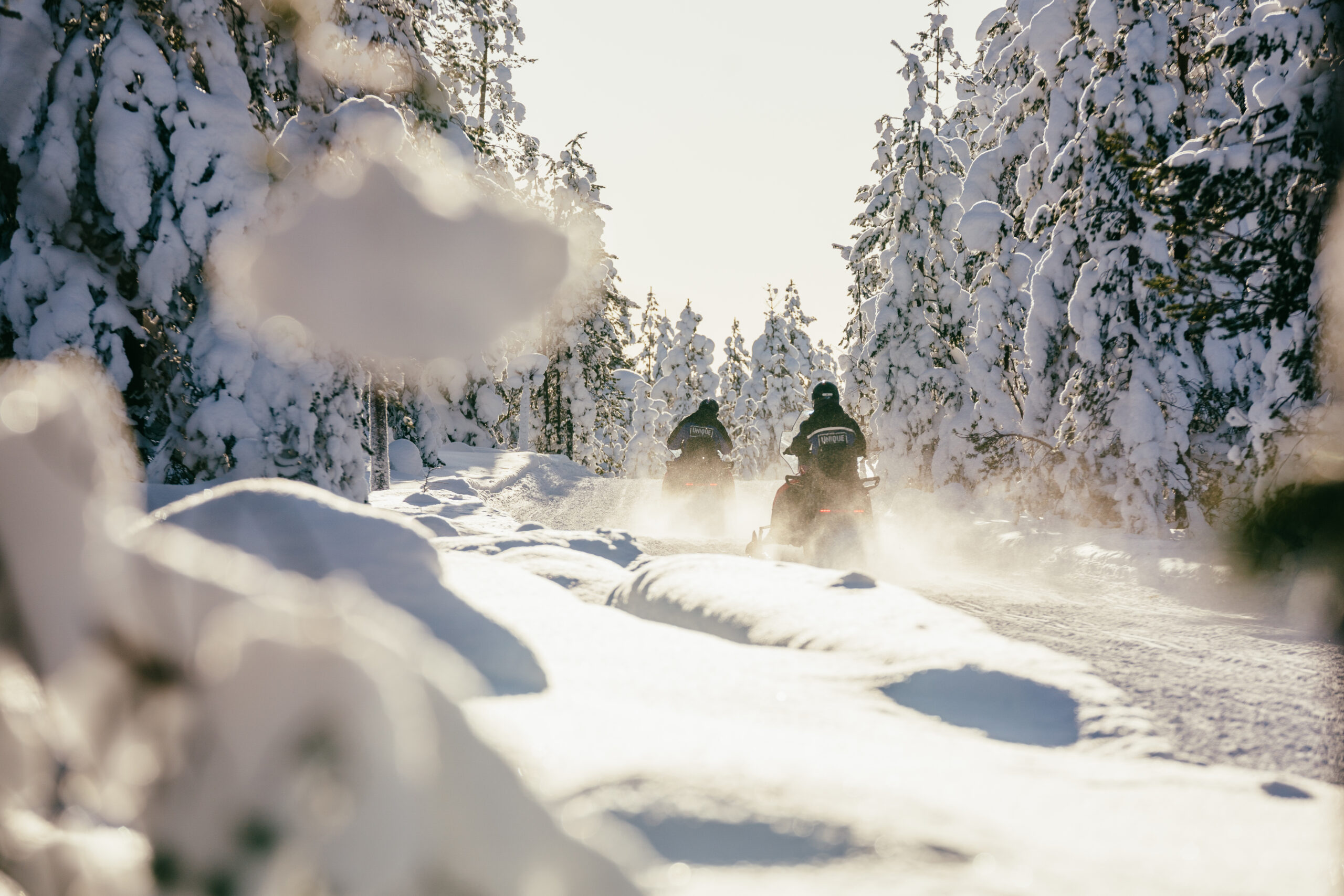
Lapland is one of those places where expectations are high. You have probably seen the photos — the northern lights, the huskies, the snowy forests. But once you arrive, the real question is simple. What should you actually do, and what is just something that looks good online?
We get this question often. Most travellers do not want a packed schedule of every advertised activity. They want two or three experiences that genuinely fit their pace, and time in between to settle into Lapland itself.
This guide covers the things to do in Lapland that consistently feel worth it when you are there — the ones our guests come back to talk about, regardless of the season they visited.
Certain experiences have become iconic for a reason. They are not just activities, but moments that shape the rest of the trip when done right.
The core experiences most people build their stay around are:
You do not need to do all of them. Choosing two or three that genuinely interest you is usually enough to shape the whole trip — and leaves time for the quieter moments that often turn out to be the most memorable.
If you want to see what is currently available in one place, you can browse all Lapland activities and pick what fits your stay.
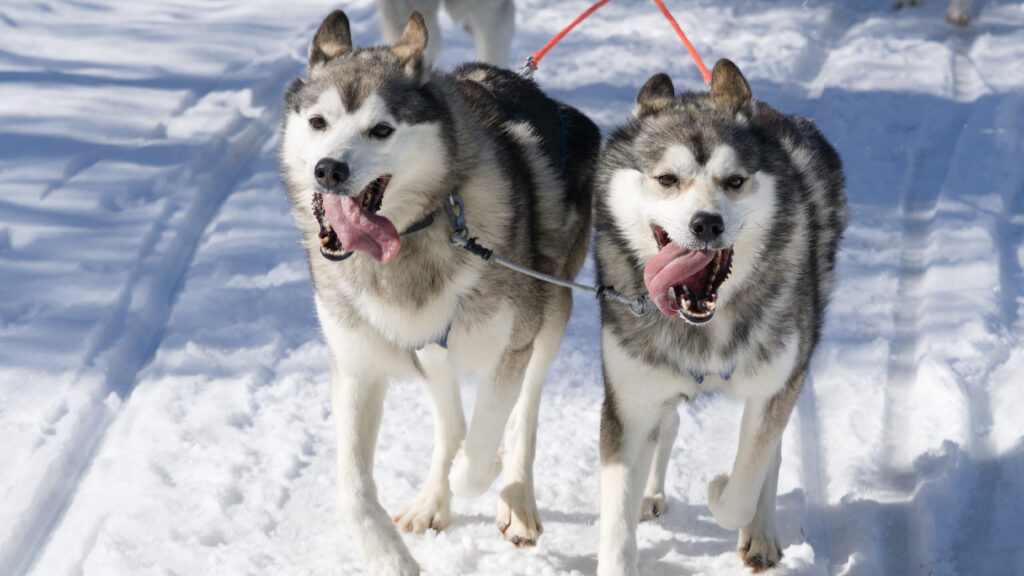
Few experiences feel as immediate as standing behind your own husky sled and heading into the forest.
The first minutes are full of energy. Dogs barking, sleds moving, snow kicking up. Then it settles. The sound softens, and the movement becomes steady. You start to follow the trail instead of thinking about it.
That shift is what makes a husky safari memorable. You are not just along for the ride. You are part of it.
Most tours run between one and three hours, including time at the kennel where the dogs live. Shorter rides suit families and first-timers; longer ones reward travellers who want quiet stretches and a stronger sense of the landscape.
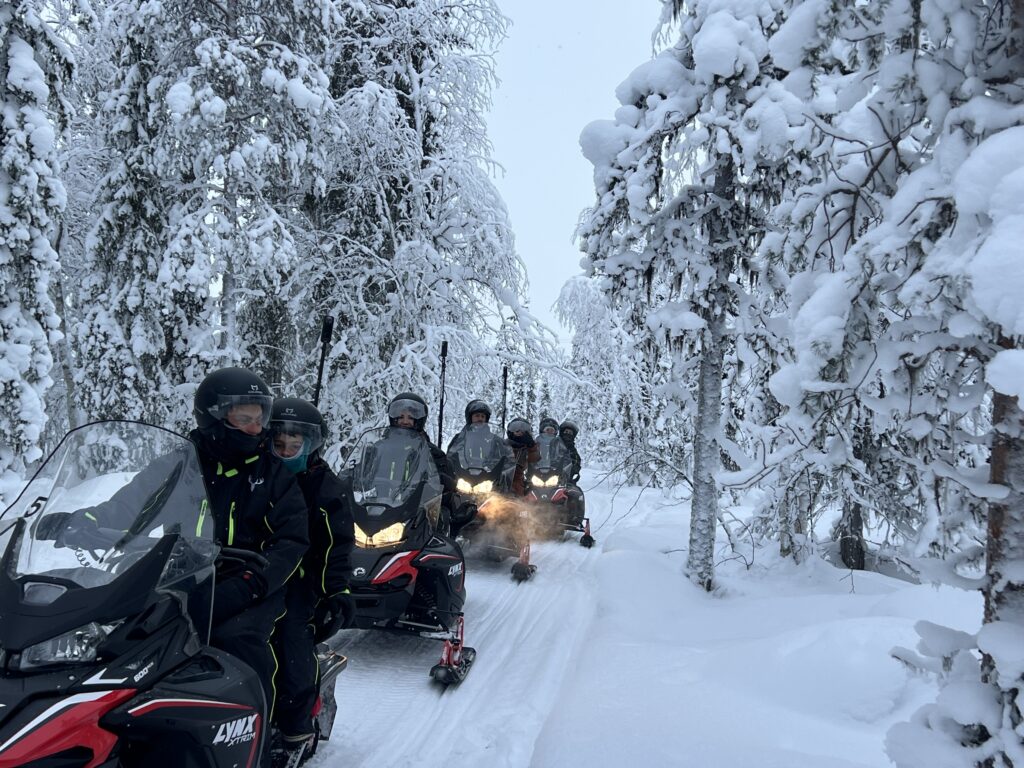
Snowmobiles take you into parts of Lapland you would not reach otherwise.
Routes often move from forest into open fell landscapes, where the space around you changes completely. During the day, the views stretch far in every direction. In the evening, the light fades and everything feels quieter.
Many travellers end up choosing between:
Both work well. The difference is the atmosphere — and the right choice usually depends on what else is on your schedule that day.
A valid driver’s licence is required for the person at the controls. Couples often share a snowmobile, taking turns driving, and children typically ride along in heated sleds pulled behind the guide.
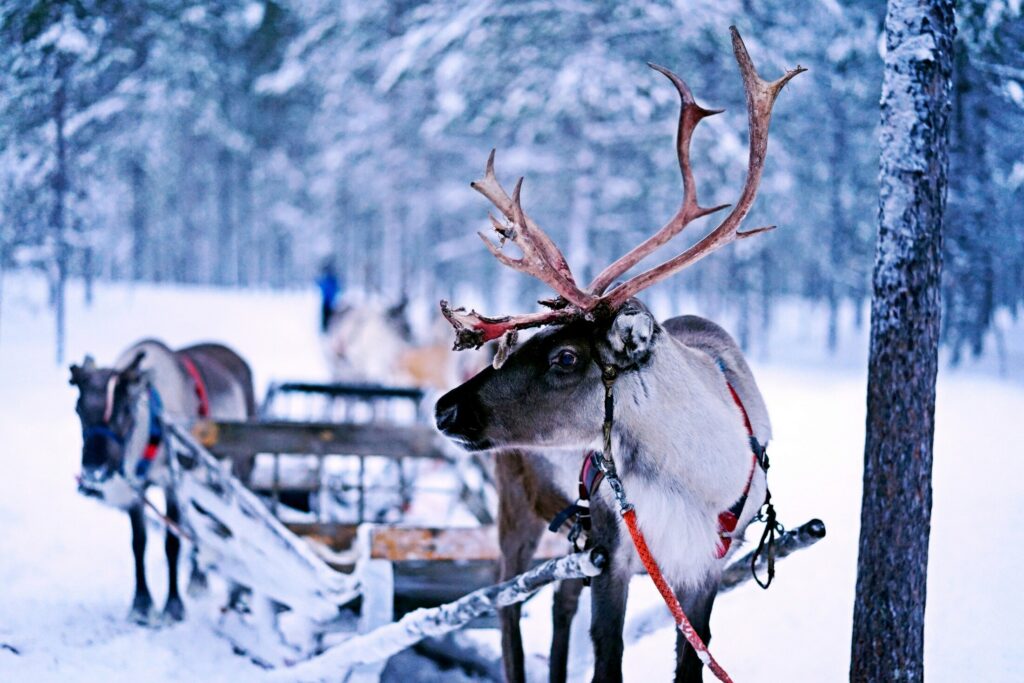
Reindeer experiences slow the pace in a way most other activities do not.
You are not moving fast. You are sitting in a sleigh or standing close to the animals, listening and observing. The focus shifts from doing to understanding.
For many visitors, this is where Lapland starts to feel more grounded. You see how closely daily life is tied to the animals and the environment. Sámi herders share short stories from their own work, and most farms include warm drinks around an open fire afterwards.
This is also one of the most family-friendly options. The pace works for all ages, and there is no equipment to learn.
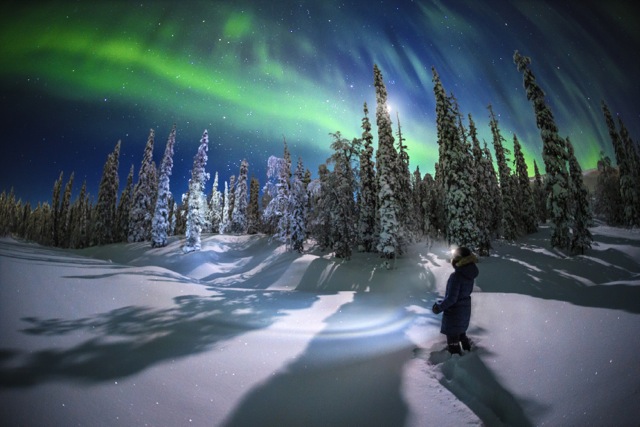
Northern lights are one of the main reasons people travel to Lapland. They are also the one thing you cannot control.
Some nights are clear. Some are not. Sometimes the lights appear quickly, sometimes not at all.
What makes the experience worthwhile is the setting. You go out into the dark, away from light pollution, and spend time under the sky. When the aurora appears, even briefly, it feels unexpected and real.
The aurora season runs from late August to early April, with the longest dark hours in December and January. If you want to plan more carefully around visibility, our guide to the best time to see the northern lights goes into detail by month.
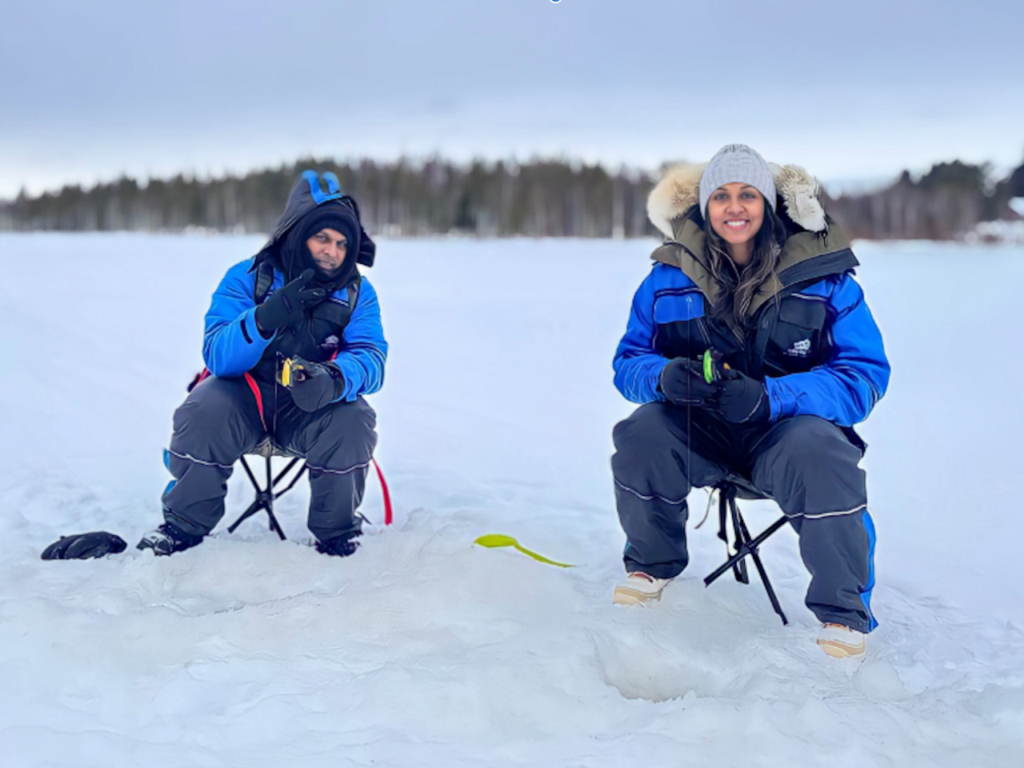
Ice fishing does not sound like a highlight on paper. But it often turns into one.
You head out onto a frozen lake, drill through the ice, and wait. Around you, there is very little movement. Then a fire is made, something warm is prepared, and the whole moment slows down.
It is simple, but that is exactly why it works. Even guests who have never fished before tell us it became the most memorable afternoon of their stay — partly because of the silence, and partly because of the shared time around the fire.
The ice is usually thick enough for fishing from December through April.
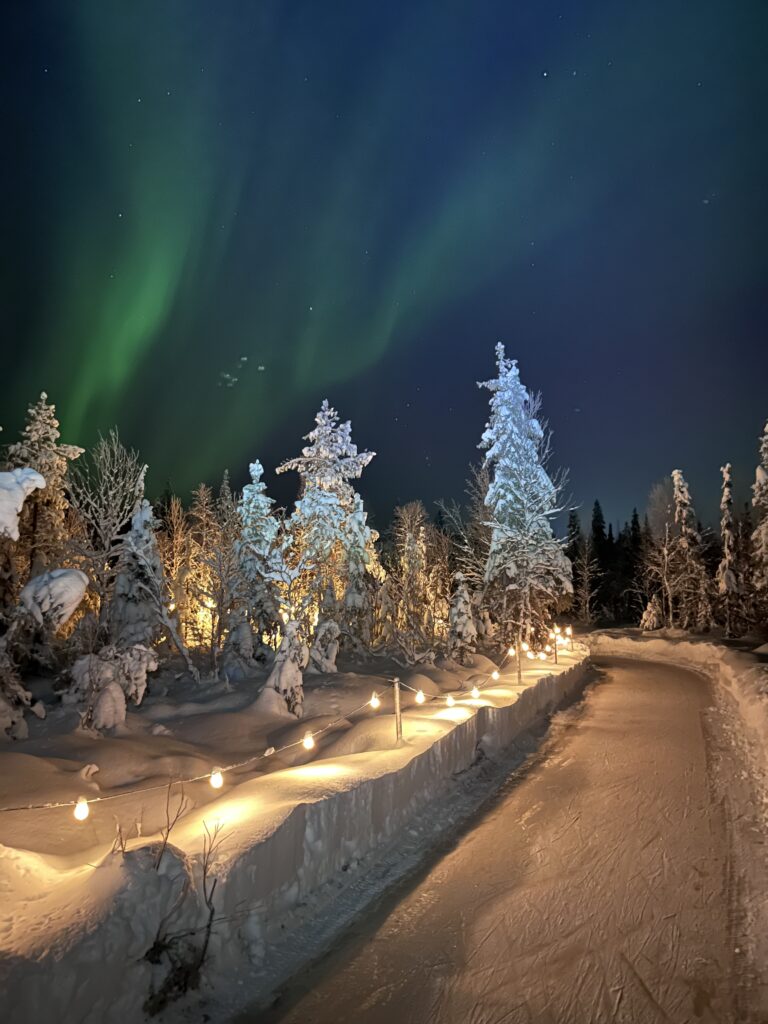
Lovimainas Forest Ice Skating is a 1 km natural ice trail that winds through snow-covered forest, lit by soft lightbulbs between the trees.
Skates and helmets are provided, and a traditional kota offers shelter from the cold along with hot drinks. The pace is your own. You can glide through the forest and stop when you want to.
It works as both an evening activity for couples and a calm afternoon outing with children. Beginners pick it up quickly because the trail is narrow, level and forgiving.
For many visitors, an evening in a traditional Finnish sauna becomes the quiet centre of the trip.
A wood-heated sauna in Lapland is not a wellness add-on. It is part of how the day ends — warm steam, cold air outside, and time to sit without anything else to do.
Many of our cabins include a private sauna, which means you can fit it into your evening without leaving the property. For something more structured, a guided private lakeside sauna evening by the Ounasjoki River pairs a pre-heated traditional log sauna with grilled sausages, hot drinks and outdoor firepit access — sometimes with the northern lights overhead from the terrace.
The same activity can feel very different depending on when you visit.
December and January carry the deepest snow and shortest days. February and March bring brighter light and steadier conditions for longer outings. Late autumn and early spring are quieter, with fewer crowds and the chance to combine winter and shoulder-season scenery.
If you have not yet decided when to come, our seasonal guide to Lapland walks through what each month actually looks like — both the experiences available and the rhythm of daily life.
Choosing the right accommodation quietly influences every part of your trip. Distance to activities, privacy, and atmosphere all affect how each day unfolds.
A more considered stay allows you to:
Properties in Levi range from modern apartments to secluded cabins. Some focus on simplicity, others on added comfort, but the common thread is ease.
Every home we list is hand-picked by our team, and every guest is looked after personally. If something is not right, you reach a real person — not a chatbot. That keeps the holiday calm even when conditions outside are not.
A few things come up often when guests look back on what they would do differently.
Most guests are happiest with two to three booked activities across a week. That leaves time for slower days, your own walks and unscheduled moments — which often turn out to be the best parts.
No. Both come with a guide and a short briefing. Snowmobiles require a valid driver’s licence; huskies do not require any prior experience. Children can ride along in both.
The aurora season runs from late August to early April, with the darkest skies in December and January. Clear weather and patience matter more than the exact month.
Many are. Reindeer sleigh rides, ice fishing trips and Lovimainas Forest Ice Skating all work well with younger children. Husky and snowmobile safaris are also possible — check the age limits and tour length before booking.
Yes, especially in high season (December–March). Popular providers fill up early. Booking before you arrive, or at the start of your stay, gives you the best choice of times.
Some, yes. Husky cart rides, reindeer farm visits, hiking and lake fishing are available in autumn and summer. Northern lights and snowmobile safaris depend on snow and darkness.
The most meaningful things to do in Lapland rarely come from ticking off a list. They emerge from the balance between activity and stillness, between guidance and freedom.
Levi gives you access to all the well-known experiences, while local activity providers take you out into the landscape itself. With the right choices, even familiar activities can feel entirely new.
If you are planning your stay, take a moment to explore available activities in Levi and build your trip around the experiences that interest you most. We are based in Levi and happy to help you pick the right combination — including matching the activities to a Lapland holiday that fits your group.