Tips
Best Time to See Northern Lights in Finnish Lapland
The first time you see the northern lights, you usually hear yourself...
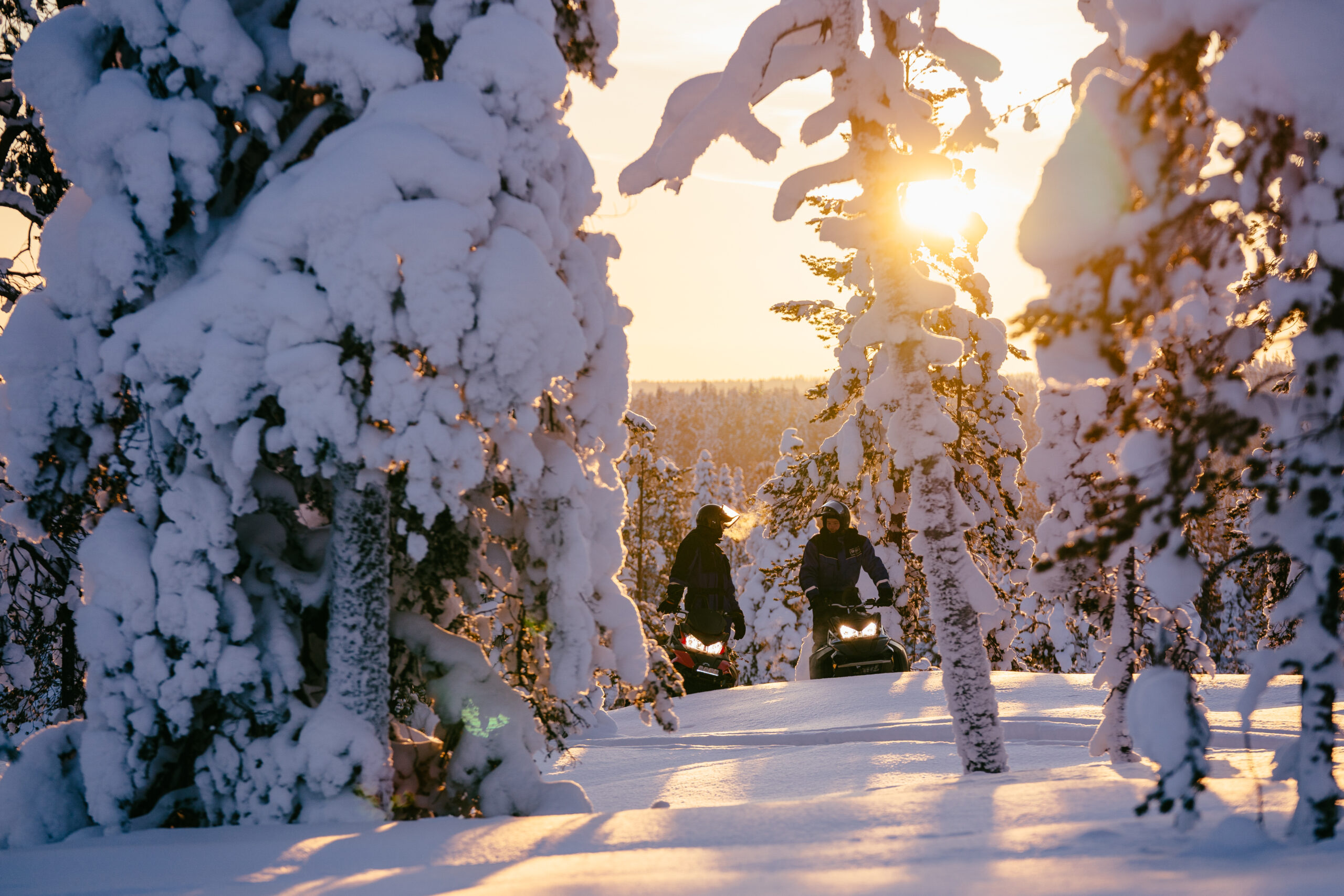
By February, Lapland has settled into the deepest, brightest part of its winter. The snow has been on the ground for months, the trails are firm, the slopes are well-groomed, and the days are noticeably longer than in January. For travellers planning Lapland in February, this is the season at its most generous: full winter conditions, more usable daylight, and a calmer rhythm than the busy Christmas peak.
Levi is one of the easiest places to enjoy all of this. The village is compact, Kittilä Airport sits about 15 km away, and a short drive separates the ski lifts from quiet forest trails. With Aavalevi, your February holiday in Levi starts in a fully prepared cabin or apartment, so the Lapland part of the trip can begin the moment you step indoors.
January and February are both deep winter months, but they don’t feel the same. In January the light is short and the cold is sharp. By February, the days are visibly stretching, the sun is climbing higher above the treeline, and the snow base is at or near its seasonal peak. Compared with March, the colours are still pure winter — white forests, blue shadows, no early melt — but you get more daylight to actually use.
In practical terms, Lapland in February gives you:
If you’re still comparing months, our seasonal guide to the best time to visit Lapland shows how February sits between the dark beauty of January and the sun-soaked end of the ski season in March and April.
February in Levi is properly cold but workable. Daytime highs sit around −8 to −12 °C, nights drop to −15 to −25 °C, and short colder spells of −30 °C are possible, especially in the first half of the month. With the right layers, this is comfortable; without them, it isn’t. Plan for thermal base layers, an insulated mid-layer, a windproof shell, mittens (warmer than gloves), warm boots, and a hat that covers the ears.
Daylight changes fast. At the start of February, sunrise in Levi is around 09:40 and sunset around 15:30. By the end of the month, sunrise is closer to 07:50 and sunset around 17:20, giving you roughly 9.5 hours of usable light. Twilight adds another hour at each end, which is when the snow takes on its famous blue glow.
The sun stays low in the sky all month, so even at midday the light is soft and angled — perfect for photography, easier on the eyes than southern winter sun, and one of the reasons Lapland in February photographs so well.
February conditions support the broadest range of winter activities of any month in Lapland. A few stand out as particularly well-suited to the season.
Levi runs 43 slopes and 27 lifts, with floodlit evening skiing extending the day. February typically brings the season’s most settled snow conditions, and ski schools run full programmes for children and beginners — useful for families with mixed ability levels. Note that the Audi FIS Ski World Cup slalom in Levi takes place in mid-November, not February, so you won’t see racing during your holiday, but the slopes used by the World Cup are part of the regular ski area.
Levi has a large network of groomed cross-country tracks that link the village with the surrounding fells and forests. February’s firm snow and longer light make this one of the most rewarding ways to spend a half-day. Trails are graded by difficulty, so first-timers can start gently while regular skiers can plan longer routes.
A husky safari through snow-covered forest is one of the most memorable Lapland experiences, and February’s cold-stable snow gives the smoothest sled rides of the season. Reindeer sleigh rides are slower and quieter, and tend to suit younger children better than husky tours.
Guided snowmobile tours head out across frozen lakes and into the open fell landscape — terrain that is difficult to reach on foot in winter. Ice fishing tours are a calmer alternative, often combined with a hot drink and a fire on the lake.
For days when you don’t want a full programme, snowshoeing into the forest behind your cabin is enough. Combined with a long sauna and an unhurried dinner, it’s the rhythm most Aavalevi guests settle into by day three. You can browse the full activity menu and book directly through Aavalevi’s activities page, or see our wider list of things to do in Lapland for ideas beyond Levi.
A common misconception is that aurora season ends with January. In reality, February is one of the better months for aurora spotting in Lapland: nights are still long, statistical aurora activity peaks around the equinoxes (so February is climbing toward a peak), and clear-sky probability is reasonable thanks to cold, dry air.
Levi sits well inside the aurora oval, so on an active night you don’t need a long expedition — a step away from village light pollution is often enough. For deeper background and viewing tips, see our guide to the best time to see northern lights and our dedicated northern lights holidays in Lapland page if you want to build a stay around aurora chasing.
A practical note: most cabins in the Levi area have low outdoor light, so you can step out, give your eyes 10 minutes to adjust, and watch from your own terrace. Bring a tripod if you want photos — phone night modes work, but a 4–10 second exposure on a small camera produces noticeably better results.
A February holiday lives or dies on how comfortable your accommodation is at the end of a cold day. Aavalevi’s cabins and apartments are chosen specifically for that. You can expect:
Browse the full collection on the Lapland accommodation page, or jump straight to booking via the book Lapland activities hub if you want to combine a stay with experiences.
February is the main winter half-term window for families across the UK and continental Europe. UK February half-term typically falls in the third week of February, with some local authorities taking the second week. Continental schools (Finland, Germany, France, Netherlands) stagger their winter breaks across late February and early March, which spreads demand but also means slopes can be busy — book accommodation early and check your local authority for the dates of your travel year.
For families, February in Levi works because:
A balanced seven-night plan looks roughly like this:
You can flex this around the weather and your group’s energy. The point of a February week is not to do everything on day three.
A few things travellers underestimate:
Pack: thermal base layers (top and bottom), wool mid-layers, a warm insulated jacket, waterproof shell, mittens, wool socks, warm boots rated to at least −20 °C, neck gaiter or balaclava, sunglasses, lip balm, and a swimsuit for the sauna.
For real-time weather, snow depth and aurora forecasts, the Finnish Meteorological Institute publishes free public services for Levi and the rest of Finnish Lapland.
Yes — for most travellers, February is one of the best months to visit Lapland. You get peak snow conditions, the full winter activity menu, longer usable daylight than January, and a still-strong aurora season climbing toward the spring equinox. The trade-off is that half-term weeks are busy and cold snaps can dip below −25 °C, so book accommodation early and pack proper layers.
Half term is one of the most popular weeks of the entire winter for Lapland holidays, and February delivers the conditions to match: deep snow, working ski schools, husky and reindeer farms running family programmes, and enough daylight for a full morning and afternoon outside. Demand is heavy, though — UK February half-term coincides with continental school breaks, so accommodation in Levi books out months in advance. Reserve cabins and headline activities (huskies, snowmobiles) as soon as your dates are set.
For most travellers, yes — though it depends on what you want. February gives you noticeably more daylight, similar snow conditions, and a still-strong aurora season. January wins on quietness and on raw polar-night atmosphere in the first two weeks. If you’re balancing activities with comfortable light, February is usually the easier choice. Our January holidays in Lapland guide has a closer look at the previous month.
Yes. February is one of the more reliable months for aurora viewing in Lapland, with long enough nights, frequent clear skies, and statistical activity climbing toward the spring equinox peak. Levi’s location inside the aurora oval means even short trips outside the village often produce sightings on active nights.
Daytime temperatures usually sit between −8 and −15 °C, with nights of −15 to −25 °C and occasional colder snaps. With proper winter clothing, this is comfortable for outdoor activities. Indoors, cabins are fully heated and saunas run hot — the temperature contrast is part of the experience.
UK February half-term typically falls in the third week of February, with some local authorities taking the second week. Continental European school breaks are spread across late February and early March, so booking accommodation and activities at least a few months ahead is sensible.
Yes — particularly around Valentine’s week. Long aurora nights, private saunas, fireplaces and quiet cabin evenings make it one of the strongest months of the year for a winter break for two.
February is the month where Lapland delivers its full winter experience with usable daylight on top — peak snow, full activity menus, strong aurora chances, and a rhythm that suits couples, families and ski-focused travellers in equal measure. Levi gives you the easiest entry point: short transfer from Kittilä Airport, walk-in accommodation, and everything from World-Cup-grade slopes to silent forest trails within a few minutes’ drive.
Browse Aavalevi cabins and apartments for your February holiday in Lapland »